

If bright light has started to feel genuinely uncomfortable, or your eyes ache more often than they should, it’s easy to assume it’s just tiredness or too much screen time. Sometimes that’s exactly what it is. But persistent eye pain and light sensitivity, known clinically as photophobia, can also point to something happening on the surface of the eye that’s worth taking seriously.
The cornea, the clear, dome-shaped surface at the front of your eye, is packed with nerve endings, which is part of why even minor irritation there can feel disproportionately uncomfortable. This guide covers the most common causes, the conditions worth knowing about, and how to tell the difference between something that will settle on its own and something that needs urgent attention.
What Causes Light Sensitivity?
Photophobia isn’t a condition in itself, it’s a symptom, and one with a wide range of possible causes. At its simplest, light sensitivity happens when the eye becomes more reactive to light than normal, often because something is irritating the surface of the eye or affecting how the pupil responds.
Common triggers include dry, irritated, or inflamed eyes, corneal damage or infection, migraines (light sensitivity is a hallmark migraine symptom, even without other eye involvement), inflammation inside the eye such as uveitis, and certain medications that increase light sensitivity as a side effect. Wearing contact lenses for too long or with poor hygiene, and recent eye surgery or injury, can also bring it on.
Because the causes range from mild to genuinely urgent, persistent or worsening light sensitivity, particularly alongside pain, is worth having assessed rather than simply managing with sunglasses.
Corneal Conditions Linked to Eye Pain
A number of conditions specifically affecting the cornea are common culprits behind ongoing eye pain and light sensitivity.
Dry Eye Disease
Dry eye occurs when your eyes don’t produce enough tears, or produce tears of poor quality, to keep the surface of the eye properly lubricated. It’s one of the most common causes of chronic eye discomfort and tends to cause a gritty, burning, or stinging sensation, along with redness, a feeling that something is “in” the eye, and yes, increased sensitivity to light. Interestingly, dry eye can also cause watering, as the eye overcompensates for the lack of quality lubrication. It’s often worse by the end of the day, in air-conditioned or heated environments, or after long periods of screen use.
Corneal Infections
Infections of the cornea, caused by bacteria, viruses, or in rarer cases fungi or parasites, can cause significant pain, redness, discharge, blurred vision, and marked light sensitivity. These are more common in contact lens wearers, particularly where lenses have been worn overnight, cleaned improperly, or used beyond their recommended replacement schedule. Corneal infections can progress quickly and, left untreated, carry a risk of scarring or vision loss, so prompt assessment matters.
Keratitis
Keratitis refers to inflammation of the cornea, which may or may not be caused by infection. Non-infectious keratitis can result from prolonged contact lens wear, dry eye, or minor injury, while infectious keratitis is typically caused by bacteria, viruses (such as the herpes simplex virus), or, less commonly, contact lens-related organisms like Acanthamoeba. Symptoms typically include eye pain, redness, blurred vision, excessive tearing, discharge, and pronounced light sensitivity. Because keratitis can threaten vision if untreated, it should always be assessed by an eye care professional rather than managed at home.
When Should You Seek Emergency Care?
Most causes of eye discomfort are manageable and not dangerous. However, certain symptoms suggest something more serious and warrant urgent, same-day assessment rather than waiting for a routine appointment.
Seek emergency or urgent eye care if you experience sudden, severe eye pain, a sudden change or loss of vision, significant redness accompanied by pain (not just mild irritation), any chemical exposure or splash to the eye, an eye injury, particularly involving a sharp object or high-impact trauma, pain combined with nausea or vomiting, which can indicate a sudden rise in eye pressure, discharge with worsening pain or vision, especially if you wear contact lenses, or light sensitivity that comes on suddenly and severely, rather than gradually.
If you wear contact lenses and develop pain, redness, or light sensitivity, it’s worth removing your lenses immediately and seeking assessment, rather than waiting to see if it settles, as contact lens-related infections can progress rapidly.
As a general rule: mild, gradually developing discomfort can usually wait for a routine appointment, while sudden, severe, or rapidly worsening symptoms should be treated as urgent.
Diagnosis and Treatment Options
Getting to the root cause of eye pain and light sensitivity starts with a thorough eye examination, since the right treatment depends entirely on what’s actually causing the symptoms.
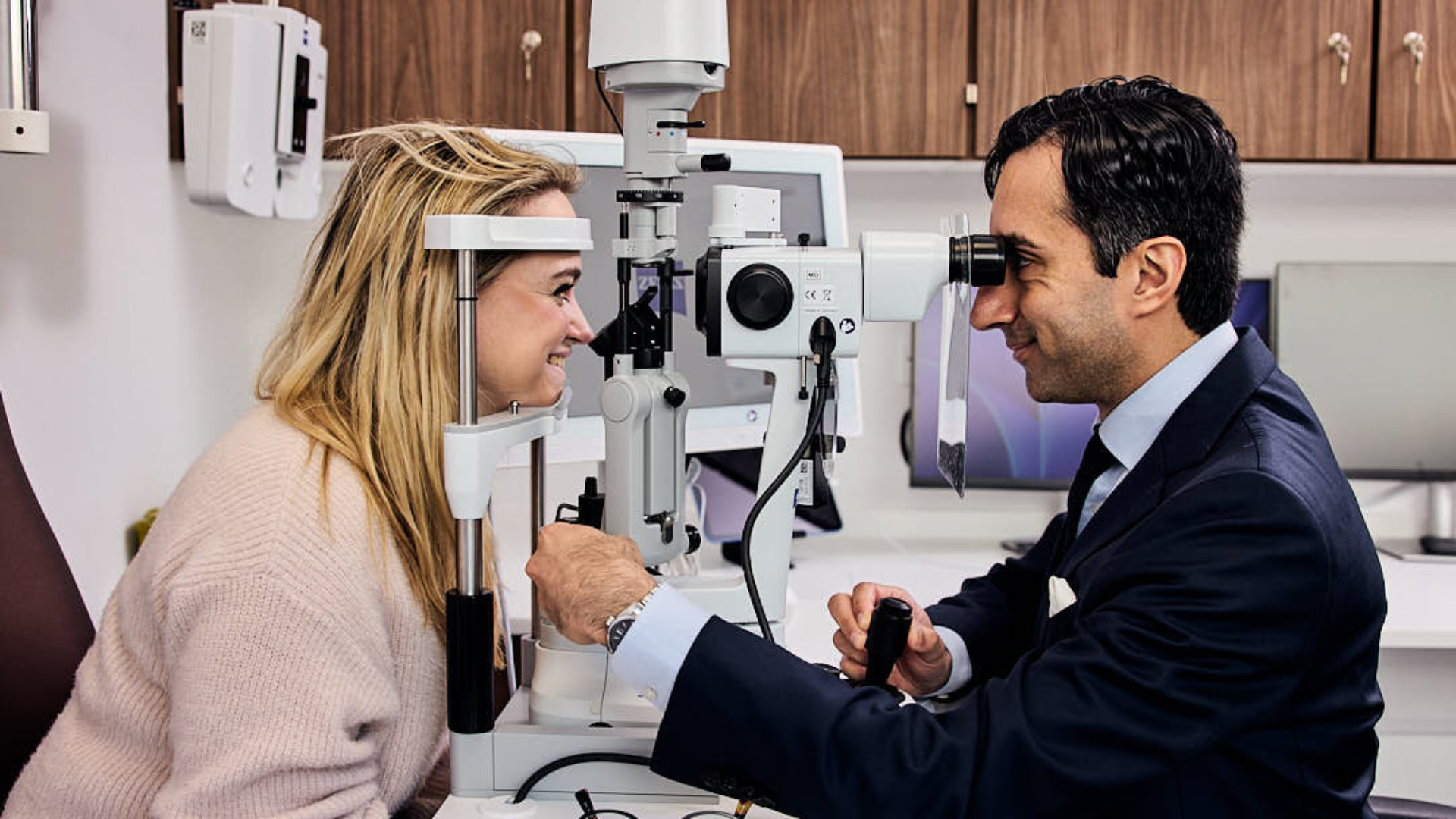
A typical assessment may include slit-lamp examination to closely inspect the cornea and surface of the eye, tear film assessment to check for dry eye, corneal staining, using a special dye to highlight any damage or ulceration on the corneal surface, and, where infection is suspected, a sample may be taken to identify the specific organism responsible so treatment can be targeted appropriately.
Treatment varies accordingly. Dry eye is typically managed with lubricating eye drops, changes to your environment or contact lens habits, and in some cases specialist treatments to improve tear quality. Infections usually require targeted antibiotic, antiviral, or antifungal drops, depending on the cause, and keratitis treatment depends on the underlying cause but often involves anti-inflammatory or antimicrobial drops, alongside close monitoring to check the cornea is healing as expected.
The key point across all of these is that self-diagnosing and self-treating persistent eye pain, for example by simply using over-the-counter drops indefinitely, risks masking a more serious underlying condition. A proper assessment ensures you’re treating the actual cause, not just the symptom.
Frequently Asked Questions
Why are my eyes sensitive to light?
Light sensitivity can be caused by a range of things, from dry eyes and migraines to corneal inflammation or infection. It happens when the surface of the eye becomes irritated or inflamed, making it more reactive to light than usual. Persistent or worsening sensitivity is worth having assessed by an eye care professional.
Can dry eye cause pain?
Yes. Dry eye disease commonly causes a gritty, burning, or stinging sensation, along with redness and light sensitivity. It’s one of the most frequent causes of ongoing eye discomfort, particularly among contact lens wearers and people who spend long hours looking at screens.
What is keratitis?
Keratitis is inflammation of the cornea, which can be caused by infection (bacterial, viral, or, less commonly, fungal or parasitic) or by non-infectious factors such as prolonged contact lens wear or minor injury. It typically causes pain, redness, light sensitivity, and blurred vision, and needs prompt assessment to prevent complications.
When is eye pain serious?
Eye pain warrants urgent attention if it’s sudden or severe, accompanied by vision changes, linked to an injury or chemical exposure, or occurs alongside nausea or vomiting. Contact lens wearers experiencing pain, redness, or light sensitivity should remove their lenses and seek assessment promptly, as infections can progress quickly.
Experiencing ongoing eye pain or light sensitivity? Book an urgent consultation with a SEON Vision specialist to get a proper diagnosis and the right treatment for your symptoms.


