

Choosing the Light Adjustable Lens (LAL) for your cataract surgery means signing up for a slightly different journey than a standard lens. It’s not a single procedure and done. It’s a process, spread across several appointments, that ultimately gives you far more control over your final result.
If you’re considering the LAL, or you’ve already chosen it and want to know what’s ahead, here’s exactly what happens at each stage.
Step 1: Lens Implantation During Cataract Surgery
The process begins the same way as any cataract surgery. Your clouded natural lens is removed and replaced with the LAL, a specially designed intraocular lens made from a photosensitive material that can still be reshaped after it’s in place. This part of the procedure typically takes around 15 to 20 minutes, is carried out under local anaesthetic, and is very similar to implanting a standard lens. The difference comes later.
Step 2: Healing and Stabilisation Period
After surgery, your eye needs time to heal before any adjustments can be made. This healing period typically lasts a few weeks, during which your vision will gradually stabilise. It’s important during this stage that the lens settles into its final position, since the light treatments that follow are calibrated to your eye’s actual healed state, not a prediction made before surgery.
You’ll also need to wear UV-protective glasses during daylight hours throughout this period, and largely until your treatments are complete. This isn’t optional: the LAL material is designed to respond specifically to the controlled UV light used during your in-clinic sessions, so protecting it from other UV exposure, including sunlight, is essential to getting an accurate result.
Step 3: In-Clinic Light Treatment Sessions
Once your eye has stabilised, you’ll return to the clinic for a series of light treatment sessions. This is where the lens is actually adjusted to your vision.
How Many Sessions Are Needed
Most patients need between three and five light treatment sessions in total, though the exact number depends on how your eye has healed and how much fine-tuning is needed to reach your target vision. Your surgeon will assess your progress at each visit and let you know how many further sessions to expect.
What Each Session Involves
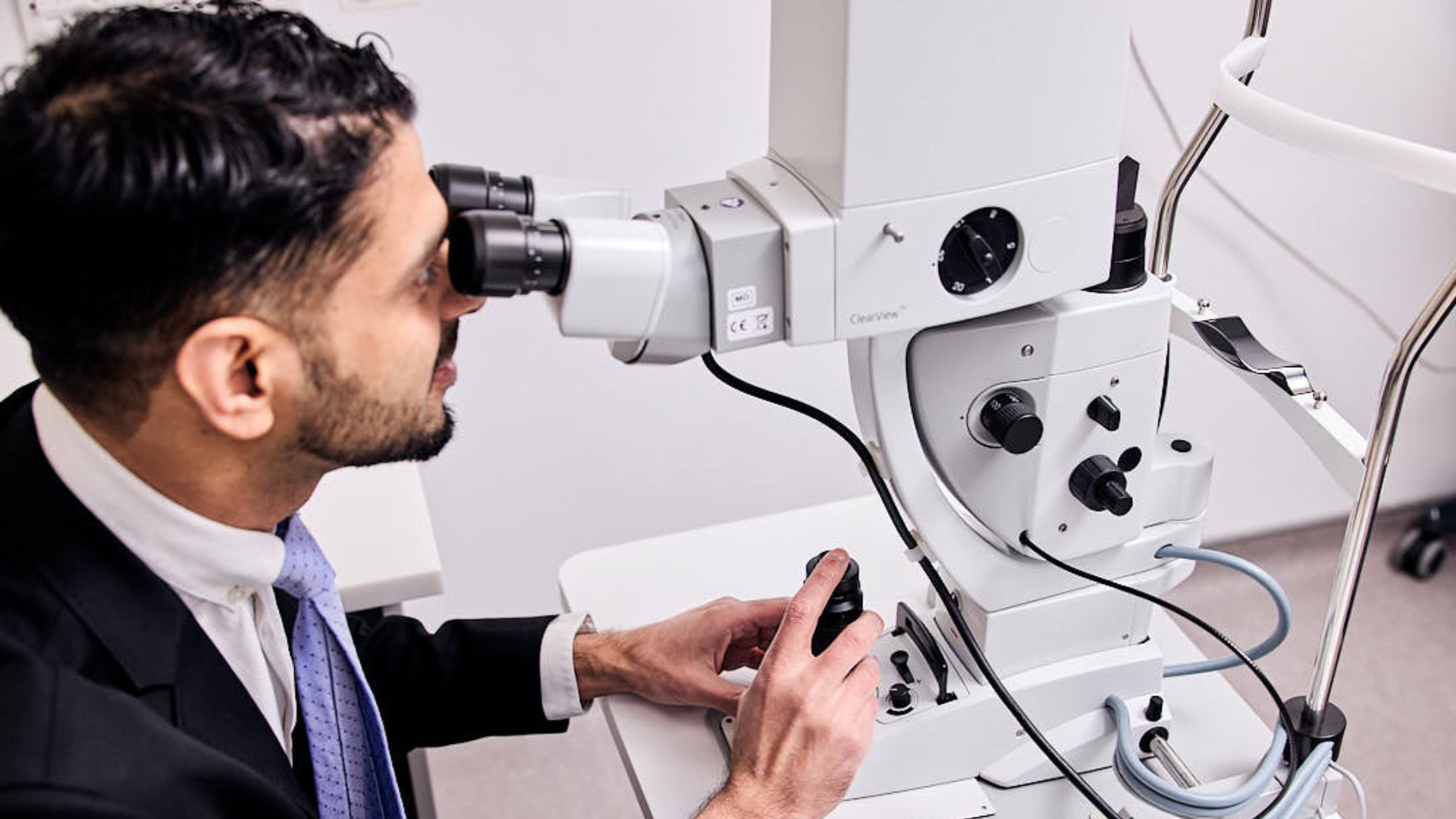
Each session is brief, typically around 90 seconds per eye, and completely painless. You’ll sit at a specialised light delivery device while your surgeon applies a precise pattern of UV light to reshape the lens material, adjusting its power to bring your vision closer to your target outcome. There’s no anaesthetic required, no incisions, and no downtime. Many patients describe it as similar to having an eye scan.
Step 4: Locking In Your Final Vision
Once you and your surgeon are happy with how your vision is performing in everyday life, whether that’s reading, driving or working at a screen, a final “lock-in” treatment is carried out. This uses a different light pattern to permanently stabilise the lens material, so no further changes can be made. From this point, the LAL behaves like any other fixed-power lens, except that its final power was chosen based on your actual healed vision rather than a pre-surgical estimate.
Protecting Your Eyes During Adjustment
Because the lens material remains responsive to UV light until it’s locked in, a few precautions matter during the treatment period:
- Wear the UV-protective glasses provided whenever you’re outdoors or near bright light sources, including during the drive home from each appointment.
- Attend your appointments within the recommended window between sessions, since delays can affect the treatment schedule.
- Avoid sunbeds or other sources of concentrated UV light entirely until your lens has been locked in.
- Let your care team know promptly if you experience any unexpected changes in vision between sessions.
Your SEON Vision team will talk you through all of this in detail before your first light treatment, so you’ll always know exactly what’s expected at each stage.
What to Expect from Your SEON Vision Care Team
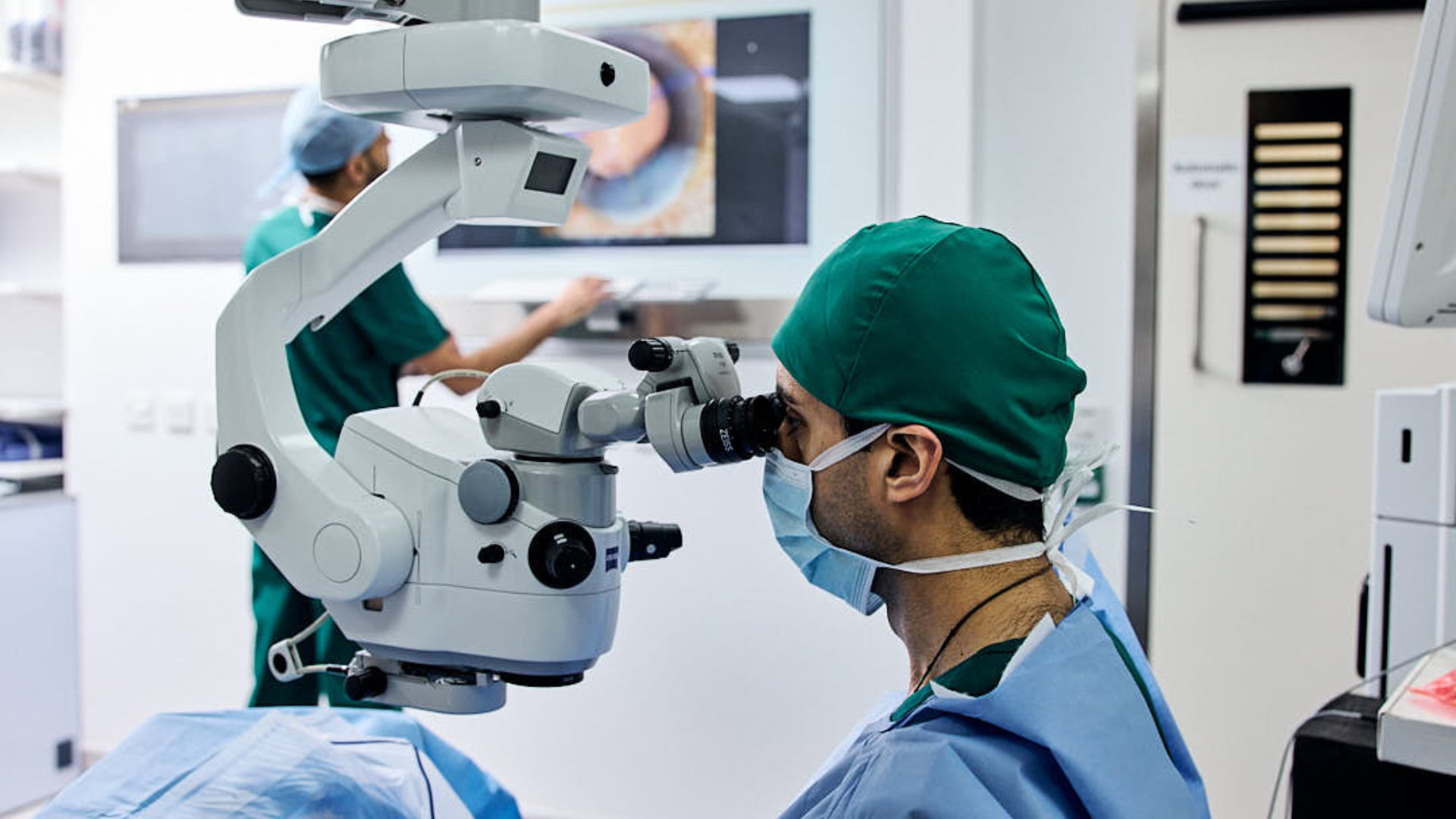
Throughout the process, you’ll be supported by a team experienced specifically in LAL treatment, not just general cataract care. That includes clear guidance on your UV protection glasses, a realistic sense of how many sessions to expect based on your individual eye, and enough time at each appointment to discuss how your vision is performing before deciding on any further adjustment. Because SEON Vision is one of only five certified LAL centres in Europe, our consultants have the specific training and equipment this process requires, from the light delivery device itself through to the final lock-in treatment.
Frequently Asked Questions
How many light treatment sessions will I need?
Most patients require between three and five sessions, though this varies depending on how your eye heals and how much adjustment is needed to reach your target vision. Your surgeon will give you a clearer estimate as your treatment progresses.
Is the UV light treatment painful?
No. Each session is painless and takes only around 90 seconds per eye. There’s no anaesthetic, no incisions and no recovery time needed afterwards.
Do I need to wear special glasses between sessions?
Yes. UV-protective glasses are essential throughout the treatment period, largely worn during daylight hours, to prevent unintended changes to the lens material before your scheduled light treatments. Your care team will provide these and explain exactly when to wear them.
How soon can I return to normal activities?
Most everyday activities can resume quickly after the initial implantation surgery, following the same guidance as standard cataract surgery. During the light treatment period itself, the main adjustment to your routine is wearing UV-protective glasses outdoors, rather than any restriction on your activities.
Considering the LAL and want a clearer sense of what your personal treatment timeline would look like? Book a consultation with our LAL specialists.


