

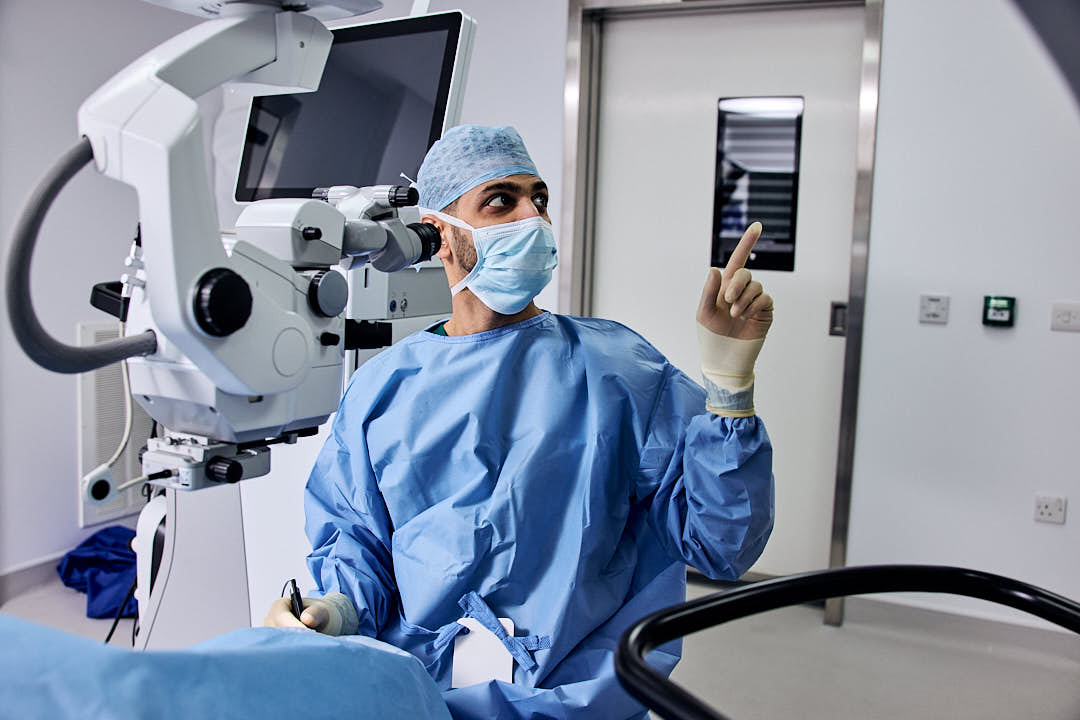
One of the biggest decisions in cataract surgery isn’t whether to have the procedure, it’s which lens to have implanted. Monofocal and multifocal lenses are the two most established options, and understanding how they differ makes that decision much easier.
How Monofocal Lenses Work
A monofocal lens is set to provide clear vision at a single distance, most commonly distance vision, meaning you’ll likely still need reading glasses for close-up tasks afterward. Monofocal lenses have been used for decades, are highly predictable, and remain an excellent choice for many patients, particularly those who don’t mind wearing reading glasses for close work.
How Multifocal Lenses Work
A multifocal lens is designed with multiple focal zones built into a single lens, aiming to provide clear vision at more than one distance, typically near, intermediate and far, without needing separate glasses. This can significantly reduce or even eliminate the need for glasses for many patients, though it involves some trade-offs in visual quality that are worth understanding before choosing this option.
Comparing Near, Intermediate and Distance Vision
Monofocal lenses typically deliver the sharpest possible vision at their single set distance, usually distance vision, with reading glasses needed for near tasks. Multifocal lenses provide functional vision across multiple distances but can involve a slight compromise in contrast sensitivity or some visual disturbances, such as halos around lights at night, particularly in the first few months as your brain adapts to the lens.
Lifestyle Factors to Consider
Driving and Night Vision
If night driving is a significant part of your routine, it’s worth discussing the potential for halos or glare with multifocal lenses, since some patients notice this more than others. Monofocal lenses generally involve fewer of these visual disturbances.
Reading and Screen Use
If you spend a lot of time reading or on screens and want to minimise your reliance on glasses throughout the day, a multifocal lens may offer a meaningful lifestyle benefit that a monofocal lens, set for distance only, would not.
Where the Light Adjustable Lens Fits In
The Light Adjustable Lens takes a different approach from both. Rather than choosing a fixed multifocal design before surgery, it allows your surgeon to fine-tune your vision after your eye has healed, based on how you actually see in daily life. For patients who want the flexibility of a customisable outcome, rather than committing to a fixed multifocal design or a single-distance monofocal lens in advance, the LAL is worth discussing as a separate option.
Choosing with Your Consultant
There’s no single “best” lens for every patient. The right choice depends on your lifestyle, your tolerance for wearing reading glasses, your night driving habits, and your budget, since premium options like multifocal lenses and the LAL typically cost more than a standard monofocal lens. A detailed consultation, including a discussion of exactly how you use your vision day to day, will help identify which lens is the best fit.
Frequently Asked Questions
What’s the difference between multifocal and monofocal lenses?
Monofocal lenses provide clear vision at a single distance, usually distance vision, meaning reading glasses are typically still needed. Multifocal lenses provide functional vision at multiple distances, reducing dependence on glasses but with some trade-offs in visual quality, such as possible halos at night.
Will I still need glasses with a multifocal lens?
Many patients significantly reduce their need for glasses with a multifocal lens, though some may still want glasses for specific tasks or in certain lighting conditions.
Are multifocal lenses more expensive?
Yes, multifocal lenses typically cost more than standard monofocal lenses, reflecting the more advanced lens design. Speak to our team for current, transparent pricing.
Can I switch lenses after surgery?
Standard monofocal and multifocal lenses cannot be adjusted once implanted, though they can occasionally be exchanged through a further surgical procedure. The Light Adjustable Lens is the only lens that can be fine-tuned after surgery without an additional operation.
Weighing up your lens options for cataract surgery? Book a consultation to discuss which lens suits your lifestyle.


