

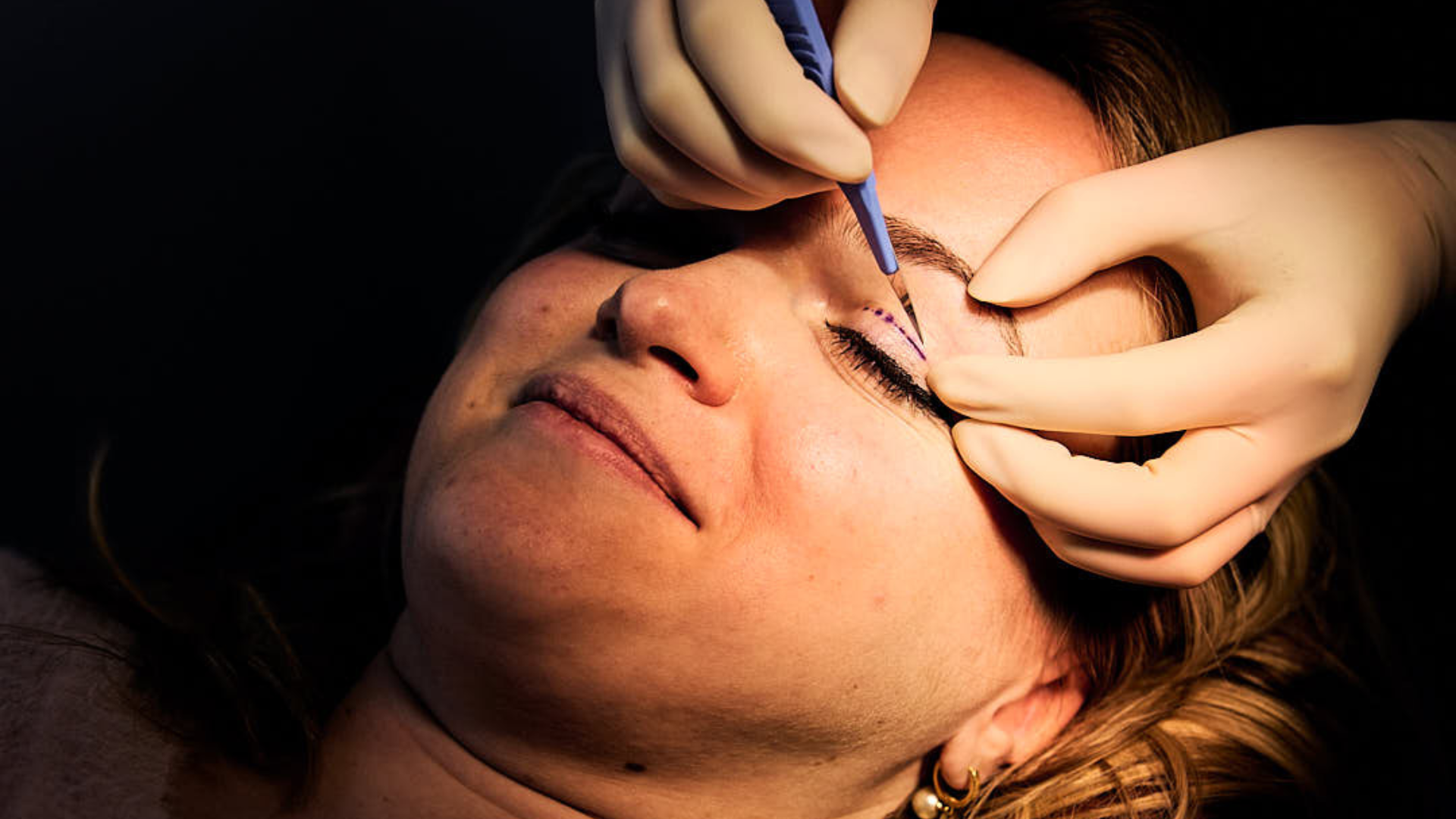
If you’ve started researching eyelid surgery, you’ve probably noticed that “blepharoplasty” isn’t a single procedure at all. There’s upper blepharoplasty, lower blepharoplasty, and the option to combine both, and knowing which one actually addresses what’s bothering you is the first, and most useful, question to answer before booking a consultation.
This guide breaks down what each procedure treats, how to tell which one applies to you, and what to expect from recovery and cost, so you can walk into a consultation already knowing the right questions to ask.
What Upper Eyelid Blepharoplasty Treats
Upper blepharoplasty addresses the upper eyelid, specifically excess skin, and sometimes fat or muscle, that has accumulated above the eye over time. As skin loses elasticity with age, it’s common for the upper lid to develop a heavy, hooded appearance, which can make the eyes look tired or smaller than they are, and in more pronounced cases, can genuinely restrict the upper field of vision.
The procedure involves removing excess skin (and, where needed, small amounts of underlying fat) through a small incision carefully placed within the natural crease of the eyelid, so any resulting scar is well hidden once healed. The result is typically a more open, refreshed appearance to the eyes, and where hooding was affecting vision, a genuine improvement in peripheral sight.
Upper blepharoplasty is one of the more common oculoplastic procedures, in part because it’s sometimes medically necessary rather than purely cosmetic. Where hooding significantly obstructs vision, it may be assessed and, in some cases, funded differently to a purely aesthetic request, worth discussing during your consultation.
What Lower Eyelid Blepharoplasty Treats
Lower blepharoplasty focuses on the area beneath the eye, most commonly addressing under-eye bags, puffiness, and fine wrinkling of the lower lid skin. These changes typically happen as the fat pads beneath the eye, normally held in place by supportive tissue, begin to bulge forward as that tissue weakens with age, creating a persistent puffy or “tired” look that isn’t related to sleep or lifestyle.
Depending on what’s being treated, the procedure may involve repositioning or removing excess fat, tightening loose skin, or a combination of both. Incisions are typically placed either just below the lash line or inside the lower eyelid itself (a transconjunctival approach), which leaves no visible external scar and is often suitable for patients whose main concern is fat repositioning rather than excess skin.
Unlike upper blepharoplasty, lower eyelid surgery is almost always aesthetic in nature, since it doesn’t typically affect vision, though many patients find it makes a meaningful difference to how rested and refreshed they look.
Can Both Be Combined?
Yes, and it’s a common combination. Many people notice both upper hooding and lower puffiness developing around the same time, since both are driven by similar age-related changes to skin elasticity and supporting tissue. Combining upper and lower blepharoplasty in a single procedure is generally safe and can offer a more balanced, harmonious result than treating one area alone, particularly where both are contributing to a tired appearance.
That said, combining procedures does mean a longer single recovery period, so it’s worth discussing with your consultant whether a combined approach or a staged approach (treating one area, then the other later) better suits your circumstances, downtime availability, and goals.
How to Know Which You Need
If you’re not sure whether your concern is an upper eyelid issue, a lower eyelid issue, or both, there are some useful questions to ask yourself before your consultation.
Heaviness and Hooding
If your main concern sits above the eye, a sense of heaviness, hooded or drooping skin, eyes that look smaller than they used to, or eyebrows that feel like they’re constantly working to hold your eyelids up, this points towards upper blepharoplasty. A useful test: if gently lifting the skin above your eye with a finger noticeably opens up your eye and field of vision, that’s a strong sign the upper lid is the primary issue.
Puffiness and Bags
If your concern is centred below the eye, persistent puffiness, visible bags, or a hollow, tired look under the eyes that doesn’t improve with sleep or skincare, this points towards lower blepharoplasty. It’s worth noting that under-eye bags can sometimes be more about volume loss in the cheek area than the eyelid itself, which is treated differently, so an in-person assessment is genuinely useful here rather than guessing from a mirror.
Many patients, particularly those in their 50s and beyond, find they have a degree of both, which is exactly the kind of thing a proper consultation is designed to clarify.
Recovery for Each Procedure
Recovery from both procedures tends to be more manageable than people expect, though timelines do vary.
Upper blepharoplasty recovery typically involves some bruising and swelling in the first week to ten days, with stitches (where used) usually removed within a week. Most people feel comfortable returning to non-strenuous activities and light social settings within one to two weeks, once the more obvious bruising has faded, though full settling of the eyelid can take a few weeks longer.
Lower blepharoplasty recovery follows a broadly similar timeline, with bruising and swelling most noticeable in the first one to two weeks, and often slightly more pronounced than with upper lid surgery, given the position of the incision. Cold compresses, keeping the head elevated, and avoiding strenuous activity in the initial recovery period all help manage swelling.
Combined procedures generally follow the longer of the two recovery timelines rather than doubling it, though bruising and swelling across both areas can look more dramatic initially, even if the underlying recovery process is similar.
Cost and Consultation Process
Blepharoplasty pricing depends on several factors: whether you’re having upper, lower, or combined surgery, whether both eyes are being treated, the complexity of your individual case, and whether the procedure is being carried out for functional (vision-related) reasons versus purely aesthetic ones, which can affect funding routes.
Rather than quote a generic price here, which can be misleading given how much cost varies by individual case, the most reliable next step is a consultation, where a surgeon can assess your eyelids directly, explain which procedure (or combination) suits your goals, and provide an accurate, personalised quote alongside a clear breakdown of what’s included.
Frequently Asked Questions
What does upper blepharoplasty treat?
Upper blepharoplasty treats excess skin and hooding on the upper eyelid, which can make the eyes look tired or smaller, and in more significant cases, can restrict the upper field of vision. It removes excess skin (and sometimes fat) through an incision hidden in the natural eyelid crease.
What does lower blepharoplasty treat?
Lower blepharoplasty treats under-eye bags, puffiness, and fine wrinkling of the lower eyelid, typically caused by fat pads bulging forward as supporting tissue weakens with age. It’s almost always performed for aesthetic rather than functional reasons.
Can I have both procedures at once?
Yes, combining upper and lower blepharoplasty in a single procedure is common and can provide a more balanced result where both areas are contributing to a tired appearance. Your consultant can advise whether a combined or staged approach suits you best.
How much does blepharoplasty cost?
Cost depends on whether you’re having upper, lower, or combined surgery, whether one or both eyes are treated, and the complexity of your individual case. A consultation is the most reliable way to get an accurate, personalised quote.
Not sure whether upper, lower, or combined blepharoplasty is right for you? Book a consultation with a SEON Vision oculoplastic specialist for a personalised assessment and clear pricing breakdown.


