

For a lot of people researching vision correction, the biggest hesitation isn’t whether laser eye surgery works, it’s the permanence. Reshaping the cornea is, by design, not something that can be undone. If that thought gives you pause, there’s an alternative worth knowing about: the Implantable Contact Lens, or ICL.
Despite the name, an ICL isn’t a contact lens you put in and take out daily. It’s a permanently implanted lens that corrects your vision from inside the eye, without touching or removing any corneal tissue, and, crucially, it can be removed later if needed. Here’s what that actually means in practice.
What Is an Implantable Contact Lens?
An ICL is a small, soft, biocompatible lens that’s surgically placed inside the eye, positioned between the iris and the natural lens, to correct short-sightedness, long-sightedness, or astigmatism. Rather than reshaping the eye’s existing focusing structures, as laser surgery does, it works alongside them, effectively adding a permanent, precisely calculated corrective lens inside the eye itself.
The lenses are typically made from a collamer material, which includes a small amount of purified collagen, chosen specifically for its biocompatibility with the eye’s internal tissues. Once positioned, the ICL sits invisibly behind the iris and isn’t visible to others, nor does it feel any different from having your natural, uncorrected vision, aside from now being able to see clearly.
How ICL Differs From LASIK
While both ICL and LASIK correct vision and can significantly reduce dependence on glasses or contact lenses, the way they achieve that result is fundamentally different, and it’s this difference that makes ICL worth considering for certain patients.
No Corneal Tissue Removed
LASIK works by using a laser to reshape the cornea, permanently removing a small amount of corneal tissue to change how light focuses on the retina. ICL takes a different approach entirely: the cornea isn’t touched at all. This matters most for people whose cornea is too thin, or otherwise unsuitable, for laser correction, a fairly common reason patients are turned away from LASIK. Since ICL doesn’t depend on corneal thickness or shape in the same way, it can often correct prescriptions, particularly high short-sightedness, that fall outside what LASIK can safely treat.
Fully Reversible
Because the ICL is a separate lens placed inside the eye rather than a permanent alteration to the eye’s own tissue, it can be removed or exchanged if needed, whether due to a significant change in prescription, a change in your eye health, or simply personal choice. This reversibility is one of the main reasons patients choose ICL over LASIK, particularly those who feel uneasy about the permanence of corneal reshaping, even when they’d otherwise be suitable candidates for either procedure.
The ICL Procedure Step by Step
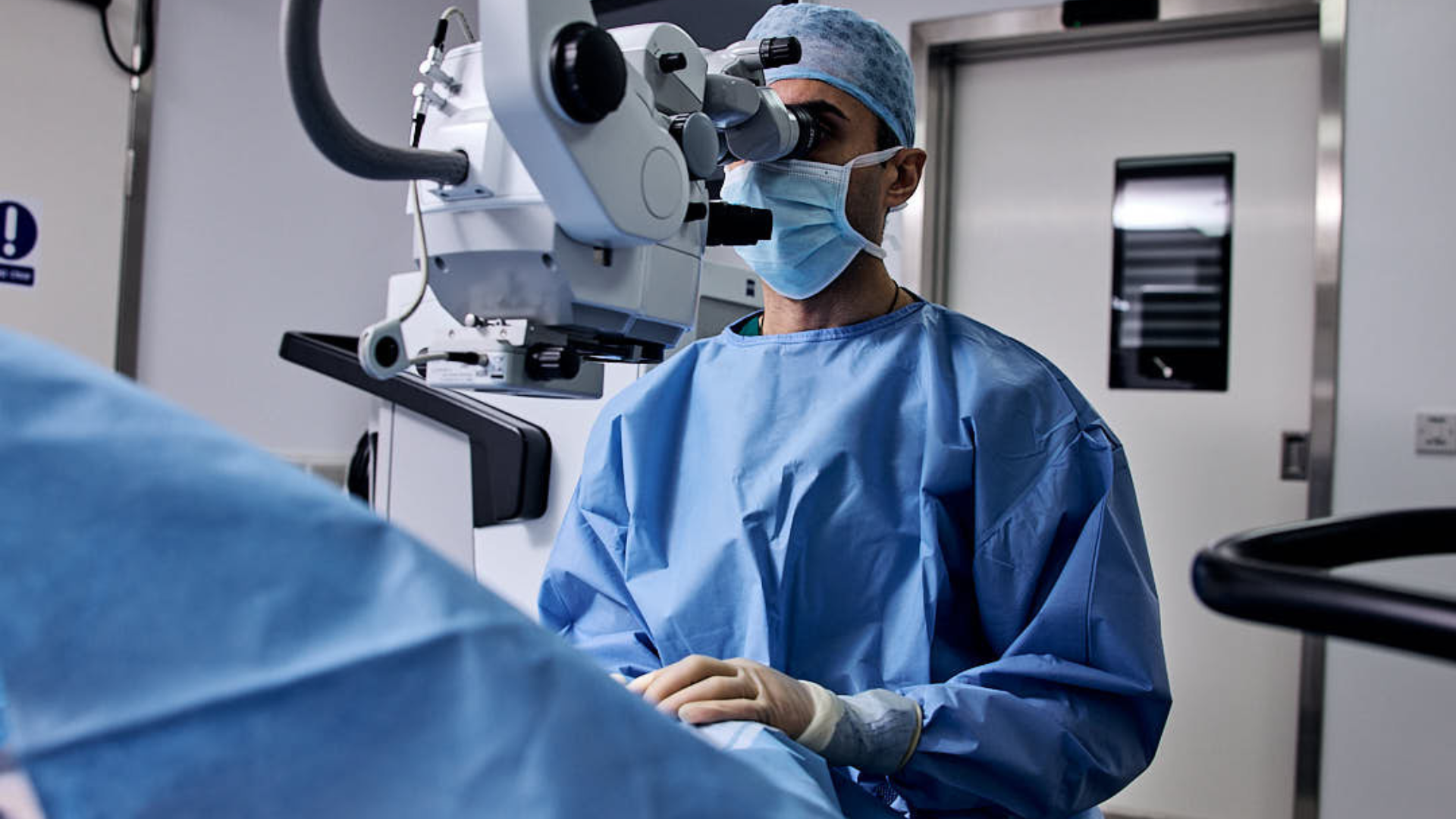
ICL surgery is typically carried out as a day case under local anaesthetic (usually numbing drops), and each eye is generally treated on a separate occasion, often around a week apart.
The process begins with a small, self-sealing incision made at the edge of the cornea, the entry point rather than the site of correction. The folded ICL is then inserted through this incision using a specialised injector, before being carefully unfolded and positioned behind the iris and in front of the eye’s natural lens. Once correctly positioned, the incision typically requires no stitches, as it seals naturally. The entire procedure usually takes around 15 to 30 minutes per eye.
Before the day of surgery, a separate, brief preparatory procedure (a peripheral iridotomy, creating a tiny opening in the iris) is sometimes required to help maintain healthy fluid movement within the eye once the ICL is in place, though this varies depending on the specific lens design used and will be discussed during your assessment.
Recovery and Results
Recovery from ICL surgery tends to be notably quick, with many patients noticing significantly improved vision within a day of the procedure, sometimes even sooner.
In the first few days, mild grittiness, light sensitivity, or slight blurring is common and typically settles quickly. You’ll usually be given eye drops to reduce inflammation and infection risk, and you’ll be advised to avoid rubbing your eyes, swimming, and strenuous exercise for a couple of weeks. Because each eye is treated separately, most people find the adjustment period manageable and are back to normal daily activities within a few days of each procedure.
Results are generally excellent and stable over the long term, and because the cornea itself is untouched, ICL doesn’t carry the same risk of long-term dry eye that some patients experience after corneal-based procedures. Regular eye examinations are still recommended after ICL surgery, both to monitor general eye health and to confirm the lens continues to sit correctly.
Who ICL Is Designed For
ICL tends to be a strong option for a fairly specific set of circumstances, which is exactly why a proper consultation and assessment matters before deciding.
It’s often well suited to people with a cornea that’s too thin for LASIK or other laser procedures, high prescriptions, particularly significant short-sightedness, that fall outside the range laser surgery can safely correct, and those who want the option of reversibility, whether for peace of mind or because their prescription or circumstances may change in future. It’s typically considered for adults roughly between the ages of 21 and 45, once your prescription has been stable for at least a year, as vision can still be changing before this point.
It may be less suitable, or need further discussion, if you have certain existing eye conditions affecting the front chamber of the eye, if your eye’s internal dimensions don’t suit the available lens sizes, an aspect specifically assessed during consultation, or if you’re outside the typically recommended age range, where other options may be more appropriate.
As with any vision correction procedure, a thorough eye examination and consultation is the only reliable way to determine genuine candidacy, since eligibility depends on detailed measurements of your individual eye anatomy, not just your prescription.
Frequently Asked Questions
What is an ICL?
An ICL, or Implantable Contact Lens, is a small, soft lens surgically placed inside the eye to correct short-sightedness, long-sightedness, or astigmatism. Unlike LASIK, it doesn’t reshape the cornea, it works alongside your eye’s existing structures from within.
Is an ICL permanent?
An ICL is designed to provide long-term, stable vision correction and is intended to remain in place indefinitely. However, unlike laser eye surgery, it’s fully reversible, the lens can be removed or exchanged if your prescription, eye health, or personal circumstances change.
Can an ICL be removed if my vision changes?
Yes. Because the ICL is a separate implanted lens rather than a permanent change to the cornea, it can be removed or replaced by a specialist if needed. This is one of the key advantages of ICL over corneal-based procedures like LASIK.
Is ICL surgery painful?
Most patients report little to no pain during the procedure itself, which is performed under local anaesthetic with numbing drops. Some mild discomfort, grittiness, or light sensitivity is common in the first few days afterwards but typically settles quickly.
Curious whether ICL could be the right vision correction option for you? Book a consultation with a SEON Vision specialist for a full assessment of your candidacy and prescription.


